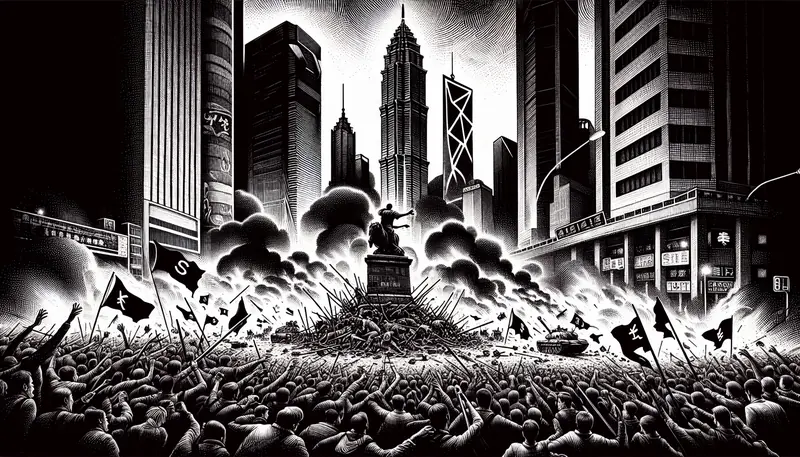
Today feels like a scene from a global drama where every character is intertwined in a storyline thick with irony and tension. In Iran, protests are erupting over a plummeting currency, causing citizens to take to the streets in frustration and desperation. The economic crisis is a potent reminder of how fragile stability can be, igniting a fire in a nation already struggling with discontent [1]. It’s a stark contrast to the calm demeanor of Vladimir Putin, who, when challenged by Donald Trump regarding Venezuela, chose to go silent—an unexpected moment of diplomacy, perhaps, or simply a strategic retreat [2].
Meanwhile, the U.S. is facing its own complexities. A rift is growing between federal agents and local police forces, reflecting a broader cultural clash that feels almost scripted in today’s political theater [3]. It’s a sobering reminder that in a world where cooperation is essential, the lines between authority and community are becoming increasingly blurred. As Trump navigates the murky waters of foreign policy, eyeing Greenland as a potential bargaining chip, the stakes continue to rise [2]. It’s like watching a chess game where each piece is playing by its own set of rules.
But it's not just politics that's causing waves. The tech world is buzzing too, albeit in a different tune. At CES 2026, the glittering showcase of innovation, one would expect to find shiny new cars taking center stage. Instead, the absence of vehicles highlights a shift in focus—automakers are now more intrigued by AI advancements than by the cars themselves [4]. Companies like Ford and Hyundai are unveiling AI innovations that promise to redefine transportation, yet the actual cars seem almost secondary, a distraction from the real excitement of autonomous driving and humanoid robots [4]. It’s a curious reflection of our times, where technology is evolving faster than the vehicles it aims to enhance.
On a more human note, the impact of climate change is creeping into discussions, particularly for Native American tribes in the Pacific Northwest, whose way of life is threatened by rising waters and shifting landscapes [4]. Their struggle underscores a universal theme: the fight against an evolving environment that pays no heed to borders or politics. As these communities grapple with the consequences, it serves as a poignant reminder that the effects of our global actions are felt far beyond our immediate surroundings.
As I reflect on these narratives, it strikes me that we're all characters in a complex play, one where the script is continually being rewritten by our choices and challenges. The protests in Iran, the chess moves of Trump and Putin, the absence of cars at CES, and the plight of indigenous tribes all weave together into a tapestry of urgency and reflection. Each thread is a reminder of how interconnected our stories are, no matter where we find ourselves on this spinning globe.