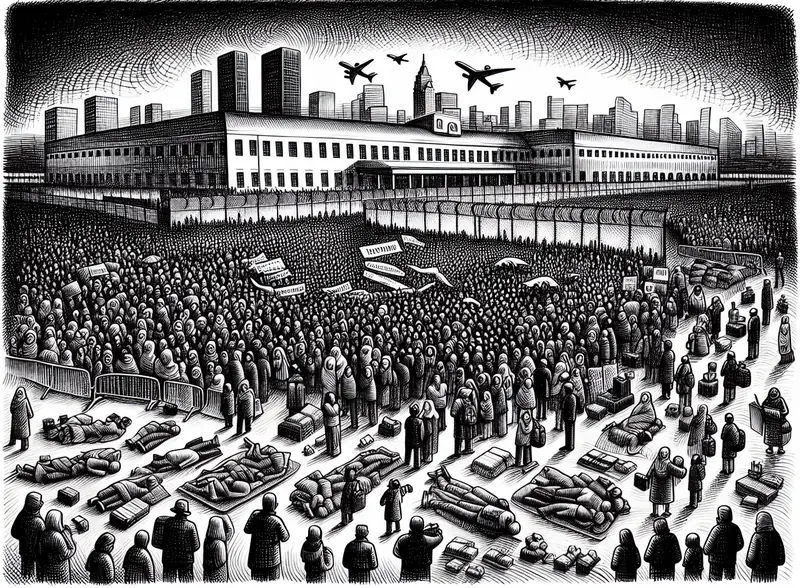
January is proving to be a month of contrasts and nostalgia, as the world grapples with changes that feel both urgent and oddly familiar. On one hand, the U.S. State Department has announced a significant pause on immigrant visa processing for 75 countries, including Iran, Russia, and Brazil. This move, framed as a crackdown on “abuse” of the immigration system, has drawn criticism for its sweeping nature and the chilling effect it may have on families hoping to reunite. While the government cites the need to protect American welfare, one can't help but sense the echoes of past immigration debates, a reminder that the fight for inclusion and opportunity is as old as the nation itself [1].
On a lighter note, the tech world is buzzing with Amazon's casting announcement for its live-action adaptation of God of War. Ryan Hurst, who voiced Thor in the game, will take on the role of Kratos. It’s a curious choice that may leave some fans wanting, particularly those who hoped for the original voice actor, Christopher Judge, to step into the role. Yet, this is merely one thread in the larger tapestry of video game adaptations currently flooding our screens, as the industry seeks to capitalize on our nostalgia for beloved franchises [2]. The rise of these adaptations is a reflection of a culture yearning for familiarity in an ever-changing landscape.
Meanwhile, the entertainment world is honoring its own legends, with Don Reo, the creator behind classics like Blossom and Two and a Half Men, set to receive the Paddy Chayefsky Laurel Award for his contributions to television writing. As he reflects on his storied career, one can't help but appreciate how television continues to shape our narratives, often mirroring the complexities of society itself. It’s a reminder that while the medium evolves, the power of storytelling remains timeless [3].
In a more contentious political scene, Congress is resisting many of Trump's proposed spending cuts, which hints at an ongoing tug-of-war between fiscal conservatism and social responsibility. This dynamic has played out through various administrations, underscoring the challenges of governance in a divided nation [4]. It’s fascinating, really; while some seek to overhaul systems, others cling to the familiar structures, often leading to a clash of priorities that echoes through the halls of power.
And speaking of echoes, Emilia Clarke recently expressed her frustration over a miscommunication regarding her portrayal of the Dothraki language in Game of Thrones. The linguist who criticized her accent later clarified that her performance was, in fact, fitting for her character’s background. This anecdote serves as a humorous reminder of the expectations placed on actors and the nuances of character development – a narrative confusion that resonates with many in the industry [5].
In a surprising twist of nostalgia, Digg has relaunched, hoping to reclaim its place in the digital landscape as a competitor to Reddit. It’s a bold move that suggests a desire for community-driven platforms, reminiscent of the early 2000s internet culture where such spaces thrived. This revival speaks to our collective yearning for connection in a world increasingly dominated by algorithm-driven content [6].
As we navigate through these intertwined stories of politics, culture, and technology, it’s clear that the past continually informs our present. Whether through immigration policies, media adaptations, or the re-emergence of platforms we once loved, we’re all part of a larger narrative, one that reflects our shared humanity amidst the chaos.