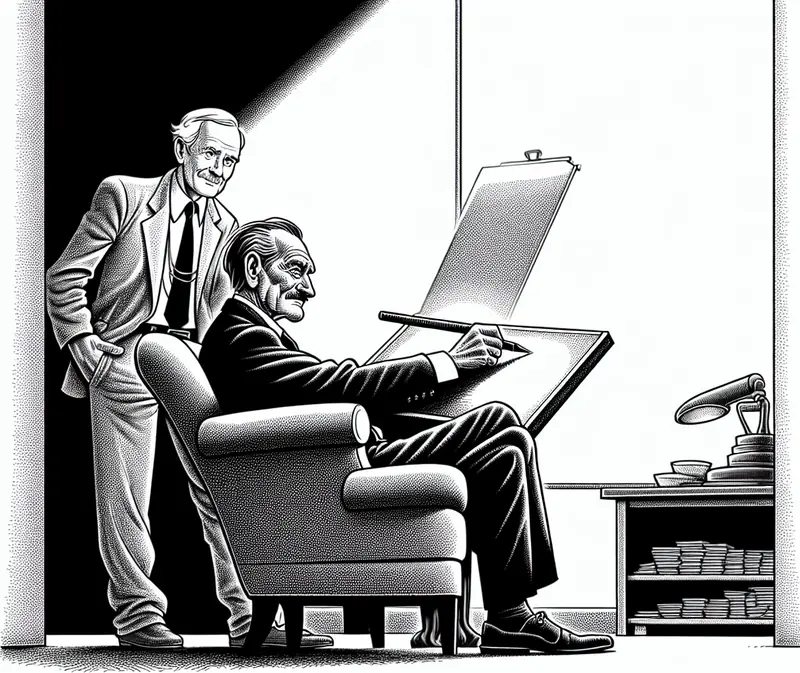
Today feels like a cinematic montage of loss and irony, starting with the news that Scott Adams, the creator of the iconic comic strip “Dilbert,” has passed away at the age of 68 after a battle with metastatic prostate cancer. Adams, who once wielded humor to critique corporate culture, became a polarizing figure with his controversial views, particularly after making inflammatory remarks about race and the COVID vaccine. His journey took a tragic turn when he revealed his cancer diagnosis, sharing that he had the same illness as President Joe Biden. It’s poignant to think that a man known for his satirical take on the absurdities of office life faced the ultimate absurdity himself, stating, “I expect to be checking out from this domain sometime this summer” [1].
Just as we’re digesting this stark reality, we turn our attention to Uganda, where internet access has been cut just days before a presidential election. This move raises eyebrows and concerns about transparency, especially as the world witnesses the fragility of democracy in various forms. While Adams' death underscores a personal battle, Uganda’s situation reflects a collective struggle against oppression, reminding us that the stakes in political discourse can be dire and urgent [2].
Meanwhile, in the business realm, Goldman Sachs warns investors flocking to gold for safety may be making a mistake. It’s a stark reminder that in times of uncertainty, the quest for security can lead to unexpected pitfalls—much like the unpredictable journey of political figures and comedians alike. The quest for stability seems a common thread, yet it can often lead us to the wrong conclusions [3].
On the entertainment front, the buzz surrounding the “Stranger Things” documentary offers a glimpse into the behind-the-scenes magic of a show that has captivated audiences. The director, Martina Radwan, discusses the essence of belief and interpretation, stating that the audience must participate in the storytelling. This mirrors the public’s engagement with the tumultuous events of today, where every story is up for interpretation and debate [4].
In the superhero universe, a new teaser for “Avengers: Doomsday” introduces the Fantastic Four teaming up with the Black Panther, a delightful escapism from our current reality. The trailer resonates with themes of loss and resilience as Shuri grapples with her responsibilities after the death of her brother, reflecting the broader narratives of grief and perseverance that permeate our lives today [5].
As if to punctuate the absurdity of our current moment, Donald Trump claims that London is unsafe, despite reports showing its murder rate has just hit a historic low. It’s a twist that captures the dissonance in political rhetoric, reminding us that sometimes the loudest voices in the room are the most disconnected from reality [6].
In this tangled web of grief, politics, and pop culture, we find ourselves navigating a landscape that is both reflective and absurd, where every moment is a reminder of our shared humanity—even as we grapple with the chaos around us.