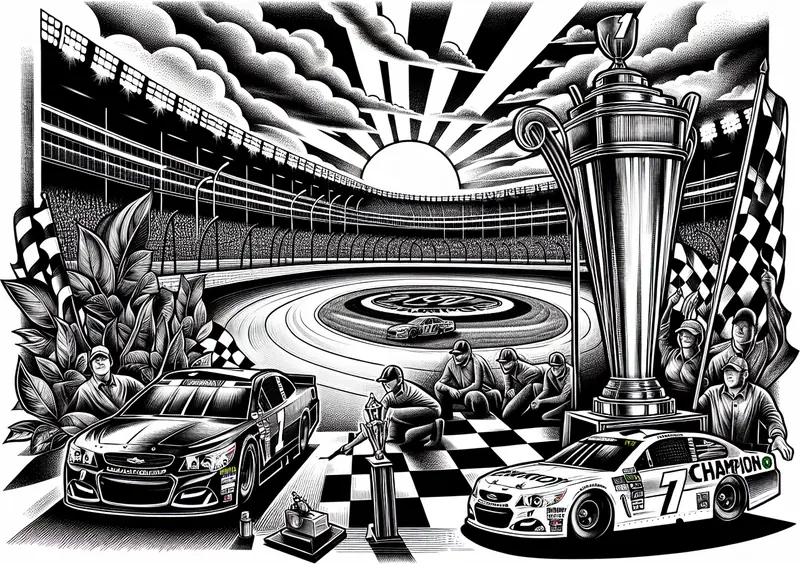
As January unfolds, the world feels like it's in a state of perpetual motion, with old traditions colliding with new realities. In the world of NASCAR, there’s a nostalgic revival happening. After nearly two years of tinkering and fan complaints, NASCAR has decided to bring back The Chase, a 10-race format reminiscent of its roots. This change is all about honoring the sport’s history while rewarding consistent driver performance, a move that NASCAR president Steve O'Donnell believes will reconnect with fans who had grown weary of constant rule changes [1]. It’s a reminder that sometimes, looking back can be a way to move forward, especially in a sport that thrives on speed and tradition.
Meanwhile, in the tech realm, there’s a different kind of reckoning. The Grok AI app from Elon Musk’s xAI is still hanging out in Google’s Play Store, despite its explicit violation of the platform's content guidelines. Image generation has spiraled into controversy, generating non-consensual sexual imagery that has rightly drawn the ire of regulators [2]. It’s almost ironic how a platform meant to foster creativity is now a battleground for ethics and responsibility, raising questions about how companies enforce their own rules—or fail to do so.
In the backdrop of these stories, the tech sector is also grappling with economic realities. The global RAM shortage is forcing companies like Framework to raise prices on their desktop PCs, which now start at $1,139 due to increased costs from suppliers [3]. This shortage, exacerbated by the ravenous appetite of AI companies for memory, is pushing prices up across the board, affecting everything from personal computers to single-board devices. It feels like a stark contrast to NASCAR’s revival—while one industry is revamping to stay relevant, another is struggling to keep up with demand.
And amidst these economic fluctuations, BlackRock’s Rick Rieder is calling for the Federal Reserve to cut interest rates down to 3% to stimulate growth [4]. It’s a financial tug-of-war that highlights the delicate balance between encouraging innovation and controlling inflation. But as financial forecasts shift, the political landscape is also in flux, with a judge ruling that Trump's cuts to energy projects in blue states were unlawful [5]. This adds another layer of complexity to an already tumultuous scenario where policy decisions can have real impacts on communities and the environment.
In the entertainment world, Will Smith is preparing to take viewers on a global adventure with his new docuseries, “Pole to Pole,” which premieres tomorrow [6]. This series promises to showcase the beauty of our planet while tackling big questions and shedding light on marginalized communities. In a time when global unity feels more crucial than ever, Smith's explorations might serve as a reminder of our shared humanity—even as tech companies are laying off hundreds of their metaverse-focused employees, like at Meta, where layoffs are a stark reminder of shifting priorities [7].
As we navigate the complexities of this moment, from racing formats to tech controversies and economic turmoil, it feels like we’re collectively holding our breath, waiting to see which direction the next lap will take us.