As the clock strikes 2026, America finds itself in a curious swirl of contradictions, where influencers vie for visas while protests erupt against immigration policies, and the ultra-rich seem to be fleeing their roots—California, to be precise. It's a strange moment, as the country grapples with its identity, both culturally and politically.
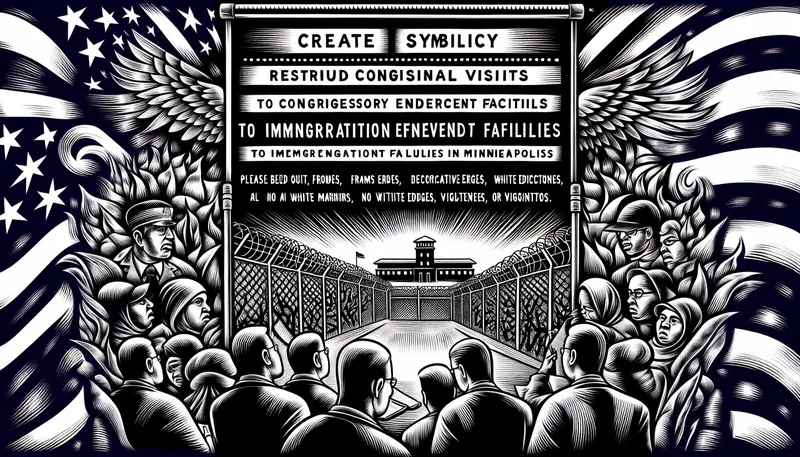
In a move that feels both strategic and unsettling, the Department of Homeland Security has restricted congressional visits to ICE facilities in Minneapolis, stifling transparency at a time when tensions are high over immigration practices. This comes on the heels of a protest in New York, where thousands marched to denounce ICE's treatment of immigrants and the broader implications of Trump's administration on civil rights. The irony is rich: while some are fighting for their right to be heard, others are attempting to limit that very discourse [1][2].
On the flip side, in a world where O-1 visas are increasingly being snagged by content creators and OnlyFans models, we see a new kind of American dream emerging—one rooted not in traditional success but in social media prowess. The number of O-1 visas granted has shot up 50% since 2014, as the likes of Julia Ain, a pandemic-born TikTok star, pivot from studying at McGill University to securing her place in the influencer economy [3]. It seems that in a landscape littered with political upheaval, there's a glimmer of optimism among the young and digitally savvy who are rewriting the rules of success.
Meanwhile, the tech titans who once defined Silicon Valley are also making headlines for their own exits. Both Sergey Brin and Larry Page are allegedly pulling stakes and relocating their interests to Nevada, possibly to escape a looming 5% tax on billionaires in California [4]. As they shuffle their assets, the rest of the country can’t help but watch—are these moves a sign of desperation, or a savvy play to dodge taxes while still clinging to their California homes?
And in the backdrop of these socio-economic shifts, we have David Letterman entering the fray, voicing his discontent with the state of late-night television and corporate media. He stands firmly behind Jimmy Kimmel, who has become a lightning rod for criticism against corporate overlords [5]. With so much at stake in the media landscape, Letterman’s comments underscore a broader struggle for voice and authenticity in a world that seems increasingly manufactured.
While the Iran protests continue under a suffocating internet blackout, highlighting the global struggle for freedom, the juxtaposition of these local narratives reveals a shared humanity battling the constraints of systems—be they political, economic, or social [6].
As we navigate this bizarre tapestry of modern America, it’s clear that the threads of influence, wealth, and activism are more intertwined than ever. Whether it’s the fight for civil rights, the rise of the influencer economy, or the tech moguls’ evasions, these stories reflect not just individual pursuits but a collective reckoning with the values we hold dear.