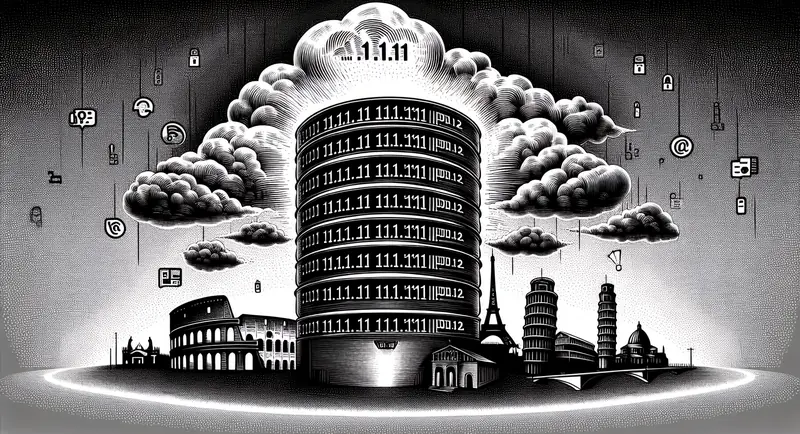
As we step into 2026, the world seems to be oscillating between the absurd and the tragic. In a strikingly dramatic move, Cloudflare is standing its ground against Italy, defying a €14.2 million fine for refusing to block access to pirate sites on its 1.1.1.1 DNS service. The Italian regulatory agency, AGCOM, claims that Cloudflare's inaction is a violation of the Piracy Shield law, which restricts access to copyrighted material. It’s a timely clash of ideals: a tech giant asserting its principles against a government wielding its authority like a sword. Cloudflare argues that such a filter would bog down legitimate sites, a sentiment that resonates in a world increasingly concerned about censorship versus freedom of speech [1].
Meanwhile, Russia is experiencing its own form of digital oppression with President Putin's staggering $12 billion internet shutdown, which seems to be part of a broader strategy to control narratives within his borders. The irony drips heavy here; while Cloudflare fights for access, in Russia, citizens are being stripped of their online voices. It's a stark reminder that the internet, for all its promise of connectivity and freedom, can also be a tool for oppression [2].
Back in the U.S., tensions flare following a fatal encounter between ICE agents and a Minneapolis mother, Renee Nicole Good. The incident—which led to her tragic death—has ignited protests and fierce criticism of ICE's tactics. Late-night hosts, often the barometers of public sentiment, are now parading the absurdity of the situation, mocking the administration's narrative that painted the shooting as self-defense. This juxtaposition of humor and heartbreak highlights a society grappling with trust in its institutions, as local officials vow to launch their own investigations into federal actions [3][4].
Adding to the cultural tapestry, the Oscars buzz is alive and well, with Jacob Elordi emerging as a surprise contender for Best Supporting Actor, thanks to his role in "Frankenstein." This year’s race seems more fluid than ever, reflecting a wider cultural moment where narratives are just as important as the performances themselves. Hollywood, amidst its glamour, is a mirror reflecting societal shifts, and it’s interesting to see who gets to shine in the spotlight while others are forced to step back due to the weight of political and social turmoil [5].
In yet another corner of the entertainment world, Wanda Sykes is stepping into dramatic waters with her upcoming boxing film, "Undercard." As she takes on the role of a former champion, it’s a reminder of how art often intersects with life’s struggles—resilience, redemption, and familial bonds are themes that resonate deeply, especially in our current climate [6].
And speaking of struggles, the tech world isn’t immune. Critics are lambasting Tim Cook and Sundar Pichai for their apparent cowardice in dealing with the controversial content on X. The failure to act against blatant violations of their own guidelines has opened a floodgate of criticism about leadership accountability in Silicon Valley, suggesting that profits may be prioritized over principles [7].
As the markets rally and the tech giants navigate their ethical dilemmas, it’s clear that the themes of power, resistance, and the search for truth are intertwined in today’s narratives. We’re witnessing a world where the digital and physical realms collide, and the fallout is felt by everyone—whether it’s through a website being blocked or a mother’s life tragically cut short. It’s a poignant moment to reflect on where we stand and what direction we choose to move forward.