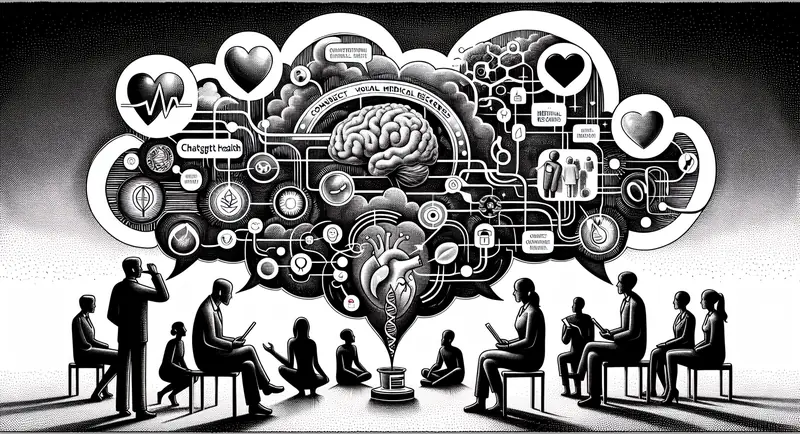
As 2026 kicks off, the world seems to be teetering on the edge of a digital revolution and a cultural reckoning. Just yesterday, OpenAI announced the launch of ChatGPT Health, a dedicated platform for health-related conversations that aims to separate personal medical queries from general chat interactions. It’s a bold move in a landscape where 230 million people are already seeking health advice from AI weekly. The CEO of Applications at OpenAI, Fidji Simo, framed it as a response to the struggles of our healthcare system, where access and continuity often feel like distant dreams [1]. But one can’t help but wonder—are we ready for AI to sift through our medical records, or is that just another layer of complexity in an already tangled web of healthcare?
Meanwhile, the political stage seems equally complex, particularly with the White House declaring that "all options" are on the table regarding Greenland. The announcement signals a potential shift in foreign policy, hinting at diplomacy but leaving the door open for other, less savory alternatives [2]. It’s ironic that while we’re busy discussing healthcare advancements, our leaders are contemplating geopolitical strategies that could involve more than just friendly chats.
In pop culture, Disney is reviving nostalgia with a live-action adaptation of Tangled, casting rising stars Teagan Croft and Milo Manheim as Rapunzel and Flynn Rider. The film follows in the footsteps of other successful reboots, but one wonders if it can capture the magic of the original, which grossed over $591 million[3]. Perhaps it’s fitting that as we look to the past for entertainment, we also face the realities of an uncertain future where AI may soon dominate Hollywood, with Roku’s CEO predicting the first “100% AI-generated hit movie” could arrive within the next three years [4].
While the entertainment industry grapples with its identity in this new landscape, the world continues to turn with a heavy heart. The recent funeral of Brigitte Bardot drew crowds in Saint-Tropez, a testament to her lasting impact on cinema and culture. Bardot, who passed away at 91, was not only a film icon but also a passionate animal rights advocate. Her farewell felt like a poignant reminder of how legacies endure even as societal norms shift [5].
On a darker note, the ongoing issues of violence and immigration have resurfaced, with reports of deadly encounters involving ICE in Minneapolis marking the ninth shooting since September. It’s a chilling statistic that underscores the complexities of modern immigration policy and the human stories behind the headlines [6].
As the pieces of our world continue to shift and collide, from AI health chats to geopolitical maneuvering, it’s clear that we’re all navigating a rapidly changing landscape. Whether it’s through the lens of nostalgia, innovation, or the pressing realities of our times, it feels like we’re all just trying to find our own stories amid the chaos.