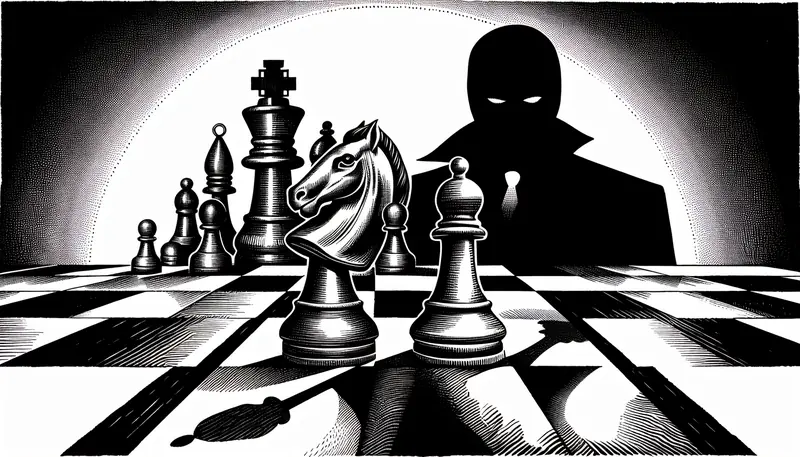
What a way to kick off the year! On a day when Aldrich Ames, the infamous CIA double agent, passed away in a federal prison at the age of 84, the world seems to be grappling with its own betrayals and ambitions. Ames, who sold U.S. secrets to the Soviets for nearly $2.5 million and compromised over 100 operations, has left behind a legacy that feels as complicated as the geopolitical tensions still playing out today [1]. His death is a reminder of the shadowy corners of espionage that continue to captivate and horrify us—his life was a thrilling, albeit tragic, tale of greed and betrayal, a classic spy novel come to life.
Meanwhile, across the globe, California fire victims are wrestling with their own battles, but it’s not against foreign adversaries—it’s against slow insurance payouts that are stalling their efforts to rebuild. After losing everything, many are still waiting for the financial lifeline that insurance promises but often delays. The irony here is palpable: while people like Ames made millions by selling out their country, those affected by natural disasters are left in limbo, waiting for the support they’ve paid into for years [2]. The contrast between greed-fueled betrayal and the desperate need for help couldn’t be starker.
And if you think betrayal is reserved for spies and insurance companies, look no further than the world of entertainment. Ranveer Singh's film, "Dhurandhar," has just become the highest-grossing Hindi-language film in India, raking in INR 981.05 crore (about $109 million) [3]. It’s a fascinating plot about an undercover agent infiltrating the dark underbelly of Karachi, which mirrors the real-life espionage drama that Ames was a part of. Perhaps audiences are drawn to these stories because they reflect a world where loyalty is often tested and secrets are a currency of their own.
In the realm of politics, we’re seeing another twist as Trump announces plans for the U.S. to acquire 30 to 50 million barrels of oil from Venezuela at market prices. This deal, which is being framed as beneficial for both nations, feels like a strategic play in a chess game that never seems to end. The Venezuelan government, still reeling from the recent toppling of Nicolás Maduro, is caught between a rock and a hard place—either comply with Trump’s demands or risk more military intervention [4]. The stakes are high, and as always, the common people are the ones left to bear the burden of political games.
As we navigate this murky landscape of betrayal, ambition, and the quest for survival, our collective story continues to unfold. From the streets of California to the silver screens of India, it seems we’re all entwined in a narrative that speaks to the human condition: the desire for a better life, the cost of ambition, and the consequences of our choices. Here’s to 2026—may it bring clarity amid the chaos.