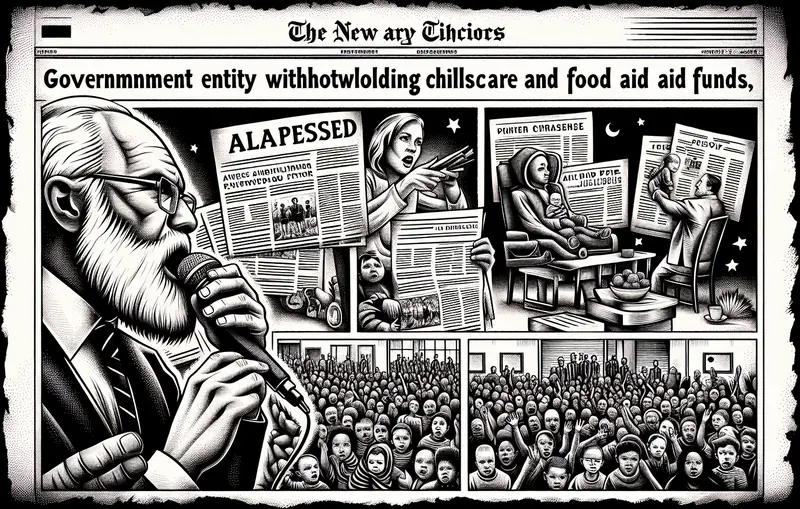
As the world kicks off 2026 with a blend of political drama and technological advancements, the headlines are buzzing. The Trump administration has frozen funding for vital programs in Colorado, impacting childcare services and food aid. It’s a stark reminder of the ongoing tug-of-war over resources that often leaves the most vulnerable behind, all while the former president is busy orchestrating a plan to import up to 50 million barrels of oil from Venezuela. The catch? He’ll be controlling the proceeds, a move that raises eyebrows about the intertwining of politics and personal profit, especially as he openly hints at military intervention if the interim government doesn’t play nice [1][4][8].
Meanwhile, in the world of tech, Intel is making waves with its announcement of a custom Panther Lake CPU aimed at handheld gaming devices. This isn't just another chip; it’s a strategic shot across the bow at competitors like Qualcomm and AMD, signaling that the race for portable gaming is heating up [2]. The irony isn’t lost here; while political leaders are wrestling with the allocation of resources, tech giants are racing to redistribute the digital landscape, crafting innovations that promise to reshape our leisure experiences.
As if to underline the cultural zeitgeist of 2026, the Oscar season is upon us, and Hollywood is in full swing. With nominations from the Directors Guild of America and the Producers Guild of America rolling out shortly, the pressure is mounting for films like "Frankenstein" and “Sinners” to prove their mettle [3]. The stakes feel particularly high this year, as the industry grapples with both the excitement of potential accolades and the underlying tensions of a rapidly changing landscape, especially in light of competing narratives from the political sphere.
Speaking of change, McKinsey and General Catalyst executives are declaring the end of the "learn once, work forever" era, suggesting that the rapid acceleration of AI technology is compelling a reevaluation of how we approach work and learning [6]. With companies like Lenovo unveiling their new AI assistant, Qira, designed to seamlessly integrate into everyday devices, it’s clear that the conversation around AI is not just about innovation but also about how these tools will fit into our lives. It feels like we’re standing at the edge of a new world where adaptability might just be the key to survival, both in the workplace and beyond.
And just to round out the day’s narrative, Samsung and Intel are teaming up to enhance laptop efficiency with their SmartPower HDR tech, aiming to make high-definition content less of a battery drain [9]. It’s a small but significant step toward making our devices work harder for us, even as the wider political and economic discussions demand that we work harder for our survival.
In this whirlwind of politics and technology, one thing is clear: the future is being shaped by those who are not afraid to take risks, whether in the boardroom or the political arena. As we navigate this complex landscape, it’s fascinating to watch how these threads intertwine, creating a tapestry that reflects our hopes, fears, and the relentless march of progress.