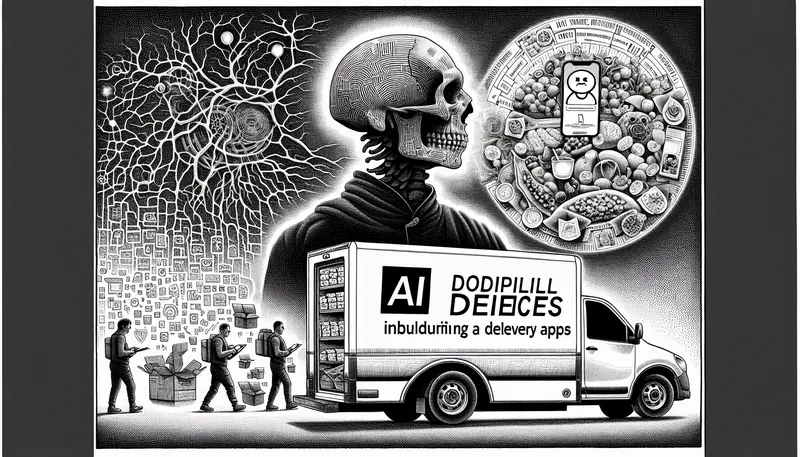
The new year is off to a wild start, showcasing our collective anxieties and aspirations in the most peculiar ways. Just days into 2026, a viral Reddit post about food delivery apps turned out to be an AI-generated hoax, leaving almost 90,000 upvotes in its wake. The post, crafted with a flair for drama, detailed the exploitation of couriers as "human assets" and played on the very real frustrations many have with these services. It’s a sign of the times when even our outcries against exploitation are clouded by the very technology that fuels it [1]. As it turns out, the delivery industry may be broken, but the stories we tell about it are getting more complicated—and more artificial [1].
Meanwhile, across the Atlantic in Ukraine, President Volodymyr Zelenskyy is putting his faith in Chrystia Freeland, Canada’s former finance minister, to bolster the country’s economic recovery amid ongoing conflict. In a government shake-up that seems to echo the urgent need for resilience, Zelenskyy is looking to Freeland’s expertise to attract investment and implement transformative changes. “Right now, Ukraine needs to strengthen its internal resilience,” he stated, a message that resonates deeply given the turbulent global climate [2]. It's ironic that while one nation struggles for independence and economic stability, another grapples with the implications of AI in everyday life.
And speaking of struggles, Venezuela swore in an interim leader, attempting to assert its autonomy from U.S. influence. This move is part of a broader narrative where countries are trying to reclaim control over their destinies amidst external pressures [1]. The interconnectedness of these events is striking; whether it’s AI-generated misinformation or a nation asserting its sovereignty, the threads of power—and the manipulation of it—are palpable.
In the realm of health, U.S. health officials have decided to slash the number of vaccines recommended for children, a move that has sparked its own set of controversies. This decision feels like a reaction to the ever-changing landscape of public health, where trust in science is increasingly tested [1]. As families navigate their choices, the specter of misinformation looms large, reminding us that the conversation is as complex as ever.
On a lighter note, the world of entertainment is indulging in surrealism, with A$AP Rocky dropping a bizarre new video featuring a singing eyeball and Winona Ryder donning a Beavis and Butthead T-shirt. The blend of humor and absurdity in the video feels like a balm in chaotic times, a reminder that creativity can flourish in even the most unpredictable environments [1]. As the year unfolds, it’s clear that whether through art, politics, or the very fabric of our daily lives, we’re all grappling with the question of authenticity—what’s real and what’s manufactured in our narratives.