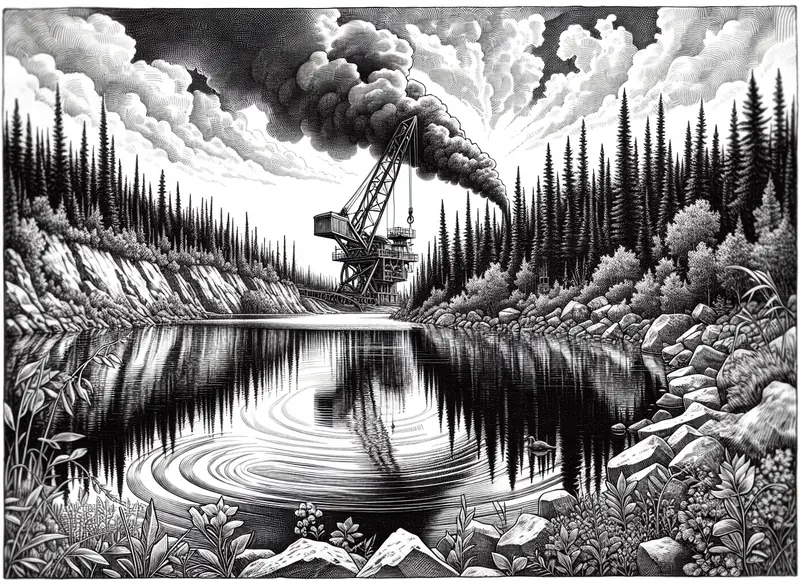
It’s a new year, and already the world feels like a spinning top, wobbling between environmental concerns and geopolitical flashpoints. In Quebec, residents are grappling with the looming threat of a controversial graphite mine backed by the Pentagon. The mine, poised to produce 100,000 tonnes of graphite over 15 years, has sparked fierce opposition from locals who fear the environmental fallout and the potential for their cherished landscapes to be sacrificed for energy transition promises. “At first, the project was sold to us as a green one,” lamented Louis St-Hilaire, highlighting the irony of a mine meant to serve the eco-friendly battery market now facing scrutiny for its potential ecological damage [1].
Meanwhile, across the globe, the Supreme Court is making headlines in the U.S. for allegedly favoring the rich, further widening the chasm between the haves and the have-nots. Economists are sounding alarms about the implications of decisions that seem to systematically benefit wealthier individuals, all while the average citizen grapples with rising costs and dwindling resources. It’s a stark reminder that while some are cashing in, others are left to navigate a system that feels increasingly rigged against them [2].
Speaking of cashing in, Chevron is riding high after a 8% stock surge following the capture of Nicolas Maduro in Venezuela. This political upheaval is not just a win for big oil but also a reflection of how quickly fortunes can shift in the volatile world of energy and politics. With one trader turning a $30,000 wager into a staggering $400,000, it seems that the stakes in the world of finance and geopolitics have never been higher [3][4].
In the midst of this chaos, the ongoing Uvalde school shooting trial serves as a grim reminder of the societal issues that continue to fester beneath the surface. As the legal proceedings unfold, they provoke questions about accountability and the role of law enforcement during crises. The juxtaposition of high-stakes financial maneuvers alongside heart-wrenching tragedies underscores a world where crises are both personal and institutional, often overlapping in ways that are uncomfortable to confront [5].
And if you’re thinking about the future, telehealth is stepping in to make our lives a little easier, particularly for those suffering from chronic coughs. With a reported 68% drop in mean hourly cough rates, it’s a testament to how technology can bridge gaps in healthcare, even as larger societal issues remain unresolved [6].
As we dive deeper into 2026, there’s an undeniable tension in the air—between progress and preservation, wealth and poverty, healing and heartbreak. The stories intertwine, reminding us that while we may be looking to the future, the past is never far behind.