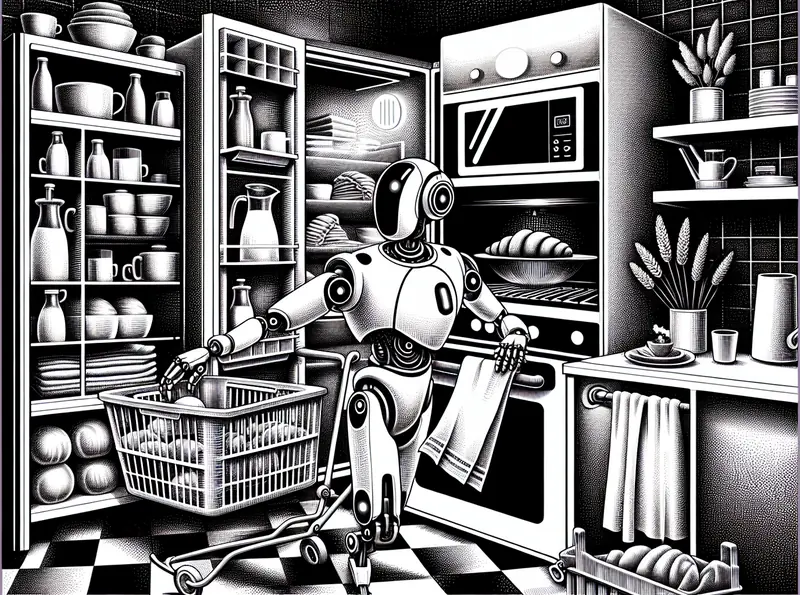
What a curious blend of the mundane and the monumental we find ourselves in today. On one hand, the folks at LG are presenting their vision of a “zero labor home” with their new CLOiD home robot, capable of folding laundry and making breakfast, all while charming you with its articulated arms and expressive face at CES. It’s almost dystopian, really—imagine a future where the biggest decision you have to make is whether to ask your robot to fetch milk or a croissant, all while the world outside your window seems to be falling apart [1].
Meanwhile, in the realm of politics, Donald Trump is making headlines for quite the opposite reason. He’s just sent shockwaves through the political landscape by declaring that the U.S. “needs Greenland” [2]. As if that weren't enough, he’s also orchestrating a military intervention in Venezuela, which has led to nationwide protests against his administration. Demonstrators across cities like Chicago and Seattle are expressing their outrage over what many see as an illegal and reckless act of aggression, echoing sentiments from past U.S. interventions that left countless innocent lives shattered [3]. It’s a stark contrast to the serene imagery of a robot folding laundry.
The irony thickens as Cilia Flores, Venezuela's former first lady, finds herself in a New York courtroom facing charges alongside her husband, former President Nicolás Maduro, after U.S. forces captured him in a dramatic raid [4]. Now, as Trump promises that the U.S. will “run” Venezuela until a “safe transition” can occur, the complexities of international politics and the messiness of human lives hang heavy in the air, reminiscent of a bad soap opera turned real-life tragedy [5].
And then there's the tech world, where Twitter co-founder Biz Stone and Pinterest's Evan Sharp are launching a new social app called Tangle, aimed at addressing the “terrible devastation” caused by social media over the past 15 years [6]. Their app encourages users to reflect on their intentions for the day, trying to bring a little mindfulness back into a digital landscape often dominated by chaos and outrage. It’s a heartening attempt to counteract the negativity swirling in the backdrop of Trump’s military maneuvers and LG's futuristic aspirations.
In a more somber turn, reports are emerging of a violent attack in Nigeria that left at least 30 people dead, fueling fears of escalating violence in regions already struggling with crime and instability [7]. The juxtaposition of a robot that can fold clothes and the harsh realities of life in Nigeria is a jarring reminder of the vast disparities in our world—a reflection of a society where technological advancements coexist with brutal violence.
As we step into 2026, it’s clear that we’re straddling two very different worlds: one where household chores can be outsourced to robots, and another where political turmoil and violence loom large. With all these threads woven together—technology, politics, and the human condition—it’s hard not to feel both hopeful and apprehensive about what lies ahead.