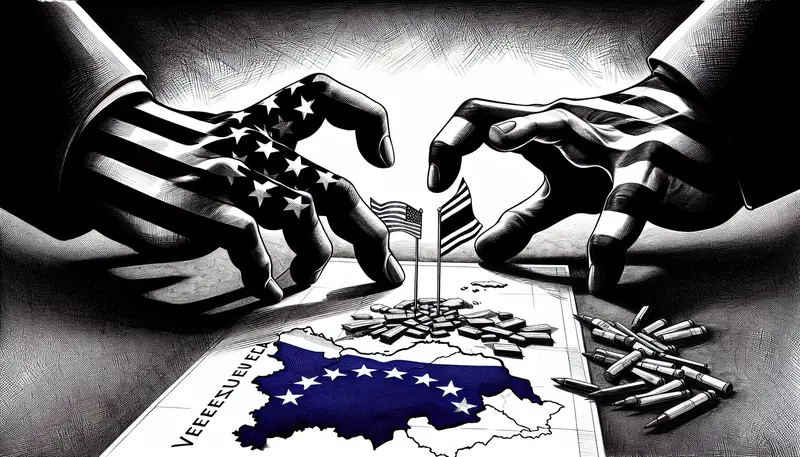
As 2026 kicks off, the world feels like a high-stakes game of chess, with pieces moving in unexpected directions. In a dramatic turn, the U.S. military launched an attack on Venezuela this past weekend, capturing President Nicolás Maduro and his wife. The implications are dizzying, as the UK's Chief Secretary to the Prime Minister, Darren Jones, admitted they were “not entirely clear” about what a U.S.-run Venezuela would mean for international relations, especially given the historical weight of colonialism. Jones emphasized the urgent need for a “peaceful transition of power” that reflects the will of the Venezuelan people, as if to remind everyone that sovereignty is still a thing, despite America’s bold moves [1].
Yet, the reverberations of the U.S. actions extend beyond Venezuela’s borders. Rightwing elements in the U.S. are already eyeing Greenland, with podcaster Katie Miller posting a cheeky map draped in American flags alongside the ominous “SOON.” Danish officials are understandably outraged, with their ambassador reminding the U.S. that they are allies, urging respect for their territorial integrity. It’s almost comedic how quickly ambitions can shift from South America to the Arctic, as if Donald Trump’s administration is playing a real-world version of Risk [2].
Meanwhile, as global tensions rise, the tech world is chugging along with its own innovations. Startup Subtle unveiled a new pair of noise-canceling earbuds designed for seamless voice interactions, showing that while governments may be wrestling for control, the everyday user just wants to chat clearly without background chaos. These earbuds promise to help you dictate notes with five times fewer errors than other popular models, proving that sometimes, technology can cut through the noise in more ways than one [3].
In a world where mindfulness is being promoted as a counterbalance to stress, a new clinical trial revealed that just one week of slow-breathing meditation might lower levels of plasma amyloid beta, a key player in Alzheimer’s disease. As we navigate these chaotic headlines, perhaps there’s solace in the notion that we can combat the anxieties of modern life, even if it feels like the world outside is spiraling [4].
And amidst all this upheaval, sports remind us of the thrill of competition and the power of resilience. Camille Rast recently ended Mikaela Shiffrin’s six-race winning streak in slalom skiing, a small yet poignant reminder that victories and defeats are part of the landscape—both on the slopes and in life. Shiffrin herself acknowledged Rast’s strong performance, celebrating her own journey even in defeat [5].
As the world turns, be it in the realms of politics, technology, or sports, we are all part of this intricate tapestry. Child care providers face scrutiny and allegations of fraud amidst funding cuts, while schools in Nigeria prepare to reopen after a mass abduction, signifying a cautious return to normalcy after a harrowing few months [6][7]. We are witnessing the ebb and flow of societal change, where every headline, every story, is a reminder of the resilience and fragility of our global community.