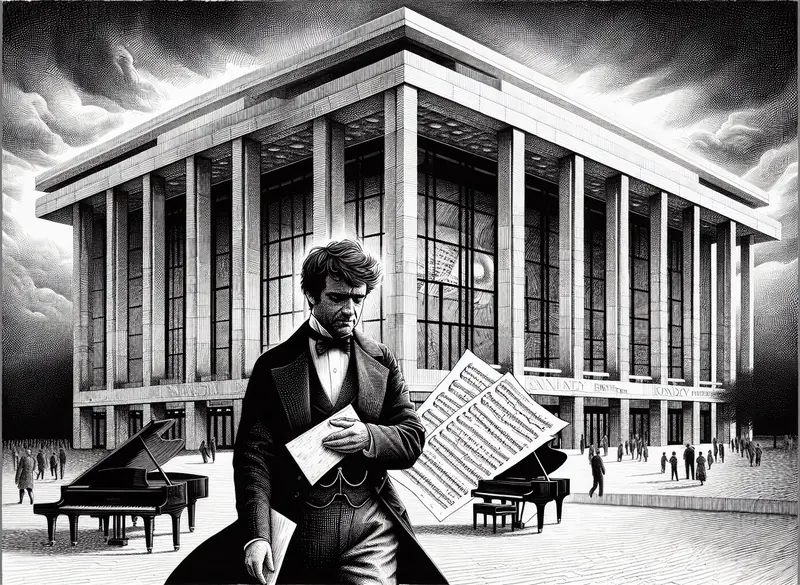
Today feels like one of those cinematic montages where the screen flashes images of joy, tragedy, and absurdity, all tangled together in a chaotic narrative. Starting with the arts, we see Stephen Schwartz, the composer behind *Wicked*, stepping back from the Kennedy Center, which has controversially chosen to adopt the name of Donald Trump. Schwartz's decision is a poignant reflection of our current cultural climate; he declared that performing there has "now become an ideological statement" that he cannot support. Meanwhile, Richard Grenell, the center’s president, dismissed these claims as "totally bogus," insisting that Schwartz's participation was never confirmed. It’s a bizarre twist in a tale that seems to echo a broader struggle over artistic freedom and political identity in America today [1].
But as the arts face ideological divides, the world continues to grapple with more visceral tragedies. The recent birthday party shooting in Stockton, California, where four lives were tragically cut short, reminds us of the stark reality of gun violence. Such incidents are becoming alarmingly familiar, casting a long shadow over celebrations that should be filled with joy. As communities grapple with grief, it becomes painfully clear that the intersection of joy and sorrow is a recurring theme in our news cycle. We are left to wonder how many more joyous occasions will be marred by violence before we see a meaningful change [2].
Meanwhile, across the pond, the Brigitte Bardot Foundation is issuing warnings about fraudulent memorabilia following the death of the iconic actress and animal rights advocate. Bardot, who revolutionized French cinema and became a symbol of liberation, is now facing exploitation even in death, as scammers attempt to capitalize on her legacy. The foundation's call to action against these "vulgar and despicable attempts" is a reminder of how easily legacies can be tarnished by greed, especially when the world is still mourning her passing [3].
In a sad parallel, the tragedy in Switzerland continues to unfold as authorities identify more victims of the deadly bar fire, which claimed at least 40 lives during New Year’s celebrations. Among the deceased are many young people, highlighting the fragility of life and the acute pain of loss that families are enduring. It’s a horrific reminder that celebrations can quickly turn into tragedies, echoing the sentiments felt in Stockton [4][7].
And in the realm of politics, Ukrainian President Volodymyr Zelensky is navigating a complex and potentially volatile political landscape. As the nation begins to awaken from a long period of turmoil, the stakes are high. Managing public sentiment while addressing ongoing conflicts requires a delicate balance, underscoring the precarious nature of leadership in turbulent times [5].
Amidst all this, humor still finds a way to break through. Adam Sandler, at the Palm Springs International Film Awards, transformed a routine acceptance speech into a comedic exploration of what might have been had his career taken a different turn. His light-hearted reflection on life as a contractor instead of a movie star provided a brief respite from the heaviness surrounding us, reminding us that laughter can be a powerful tool for coping with the chaos of life [6].
As we navigate through these intertwined stories of loss, politics, and unexpected humor, it’s evident that the fabric of our daily lives is woven from threads of joy, tragedy, and the absurdity of existence. Each headline tells us that while the world spins on, we are all participants in a narrative that is both deeply personal and profoundly shared.